What’s That: Lubricant Foam
Have you ever noticed foaming in your lubricants, such as bubbles in the sight glass, a frothy layer in the reservoir, or oil that suddenly appears cloudy after start-up? Foaming is easy to dismiss because it’s visible, familiar, and often temporary. However, foam is usually a sign that a lubricant is struggling to perform one of its most critical functions: separating from air quickly enough to maintain a consistent, protective lubricating film.
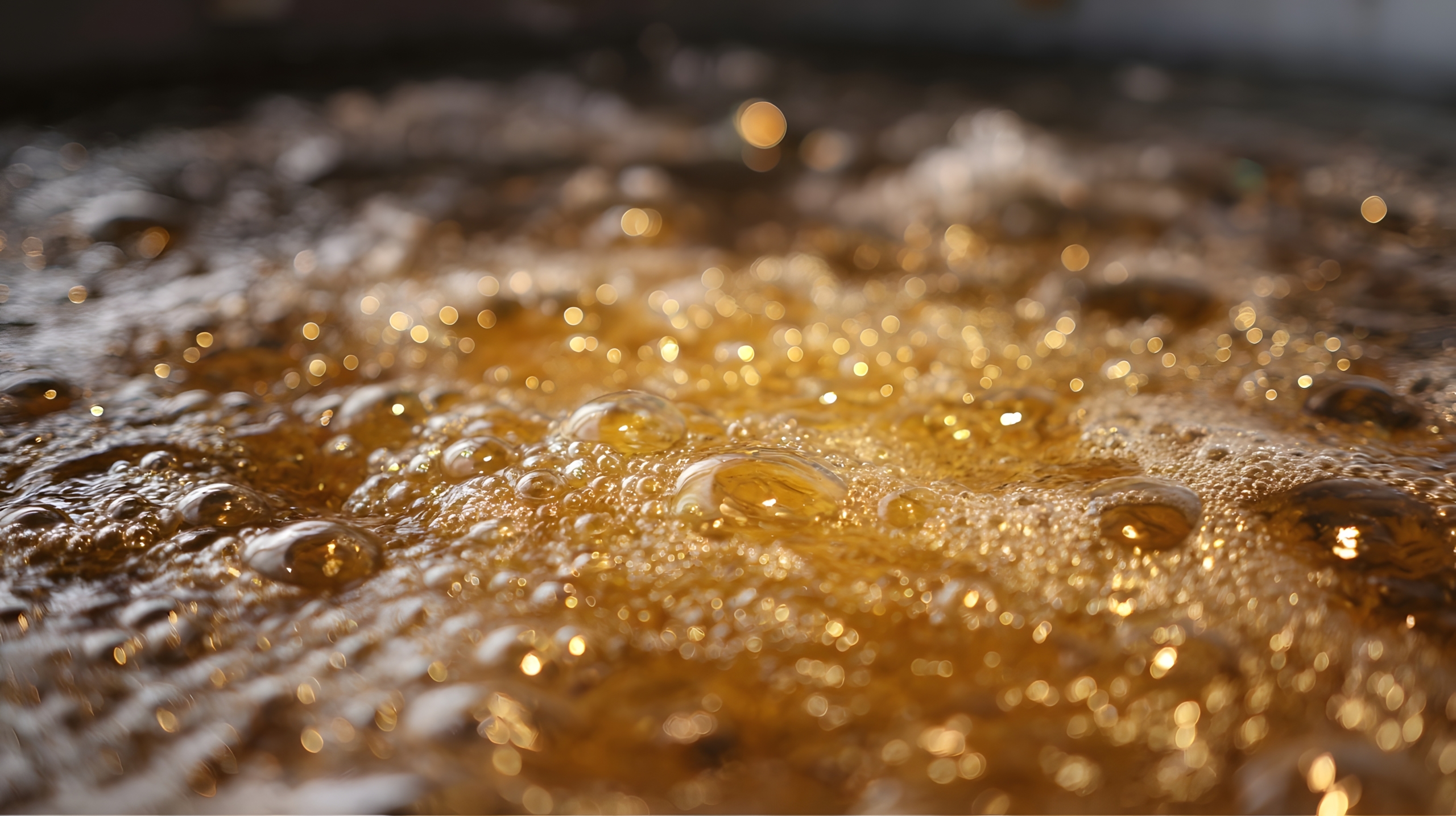
Foam typically appears as a layer or mass of small bubbles that collect on the oil’s surface (think of a persistent head of foam). ASTM’s air release standard describes this exact challenge: agitation within equipment can disperse fine air bubbles into the oil, and if reservoir residence time is too short for those bubbles to rise and escape, an air–oil mixture continues circulating through the system. Left unchecked, these conditions can reduce lubrication effectiveness, accelerate component wear, and ultimately lead to costly equipment downtime.
What is Lubricant Foam?
At its core, lubricant foam forms when air becomes trapped (entrained) in the oil and cannot be released quickly enough in the reservoir or sump. When this air–oil mixture continues circulating, the lubricant no longer behaves as a stable, continuous fluid. Instead, it becomes compressible, inconsistent, and less capable of protecting surfaces under load.
In practice, the terms foam and aeration are typically used interchangeably, but they are only related terms, not identical. Aeration, or entrained air, refers to air suspended throughout the oil, often giving it a cloudy or darkened appearance. This condition can contribute to surface foam, cavitation, and accelerated oxidation. Both foam and aeration are reliability concerns because air in oil alters how a lubricant carries load, transfers heat, and performs in pumps, bearings, and control circuits.
What Foaming Actually Does to Equipment
When foam is persistent, it can quietly create real operational damage.
- It weakens the lubricating film: When air interrupts the oil film, surfaces can see more contact, friction, and wear. Machinery Lubrication summarizes that the presence of air bubbles can reduce lubricating properties and contribute to failure in hydraulic systems.
- It accelerates oxidation and degradation: Foam and entrained air increase oil’s exposure to oxygen. Ultimately, air entrainment can increase the oxidation rate and contribute to serious air-related problems in systems.
- It creates thermal and mechanical side effects: Foam can act like an insulating layer, making oil temperature harder to control. In severe cases, foam can even escape through breathers, sight glasses, or dipsticks.
- It distorts level readings and maintenance decisions: Foam can trick level gauges and sight glasses into showing a higher “apparent” oil level than what’s truly available as liquid oil. That can lead to overfilling or underfilling, either of which can worsen aeration and foaming cycles in wet-sump systems.
Why Lubricant Foam Happens: The Usual Suspects
Foaming is rarely the result of “bad oil” alone. In most cases, it’s caused by oil interacting with system conditions that prevent air from separating effectively.
- Wrong oil or wrong formulation for the application: Different lubricants have different foam control and air release characteristics. An oil that performs well in one application may struggle in another.
- Mixing incompatible fluids: Top‑offs, product changes, or partial drains are common foam triggers. Even small amounts of incompatibility can disrupt additive balance, including anti‑foam chemistry.
- Water contamination: Water interferes with surface tension and additive performance, making it harder for air to separate from the oil. It also tends to worsen aeration and foaming behavior.
Many foaming problems come from the system itself, not just the lubricant. Air leaks on the suction side of pumps, plunging or highly turbulent return lines, and undersized reservoirs can all make it difficult for air to separate from the oil. When the system doesn’t allow enough time for air bubbles to rise and escape, air‑in‑oil conditions persist, making these design and ingress issues common causes of foaming in circulating and hydraulic systems.
Field Troubleshooting: What to Check First
If you’re seeing foam in the reservoir, sight glass, or return area, start with a quick, structured check of the system. Confirm that the oil level is correct, since both overfilling and underfilling can increase churning and air entrainment. Inspect the suction side of pumps for air leaks or loose fittings, as aeration often begins there before visible foam appears in the reservoir. Take a look at the return line behavior as well. Oil dumping below or above the fluid level with excessive turbulence can whip air into the oil, especially if residence time is limited. Finally, consider any recent changes such as a filter change, oil change, product swap, or top‑off, and check for contamination, particularly water or incompatible fluids, which can quickly worsen foaming issues.
The Bottom Line
Foam is often a visible symptom of air circulating with the lubricant, quietly compromising performance even when the oil still appears “in spec.” When air fails to release properly, lubrication becomes inconsistent, hydraulic systems lose stability, oxidation accelerates, and wear rates increase, often without an obvious alarm. That’s why equipment can exhibit warning signs like temperature fluctuations, noisy pumps, pressure instability, or sluggish response, even when routine oil analysis results look normal on the surface. At MSP, our certified lubricant specialists help customers look beyond standard test results to evaluate air release, foam control, and system conditions that directly impact reliability.
Ready to eliminate foaming risks before they impact performance and uptime? Now You Can.