What’s That: Desiccant Breathers
Dirt and moisture can enter tanks and equipment in ways that are easy to overlook. Each time a reservoir draws in outside air, airborne particles and water vapor have an opportunity to enter the system.
Once inside, these contaminants can contribute to corrosion, lubricant degradation, component wear, and other maintenance issues. So how can equipment take in the air it needs without also taking in unwanted contaminants?
That is where desiccant breathers come into play.
What Are Desiccant Breathers?
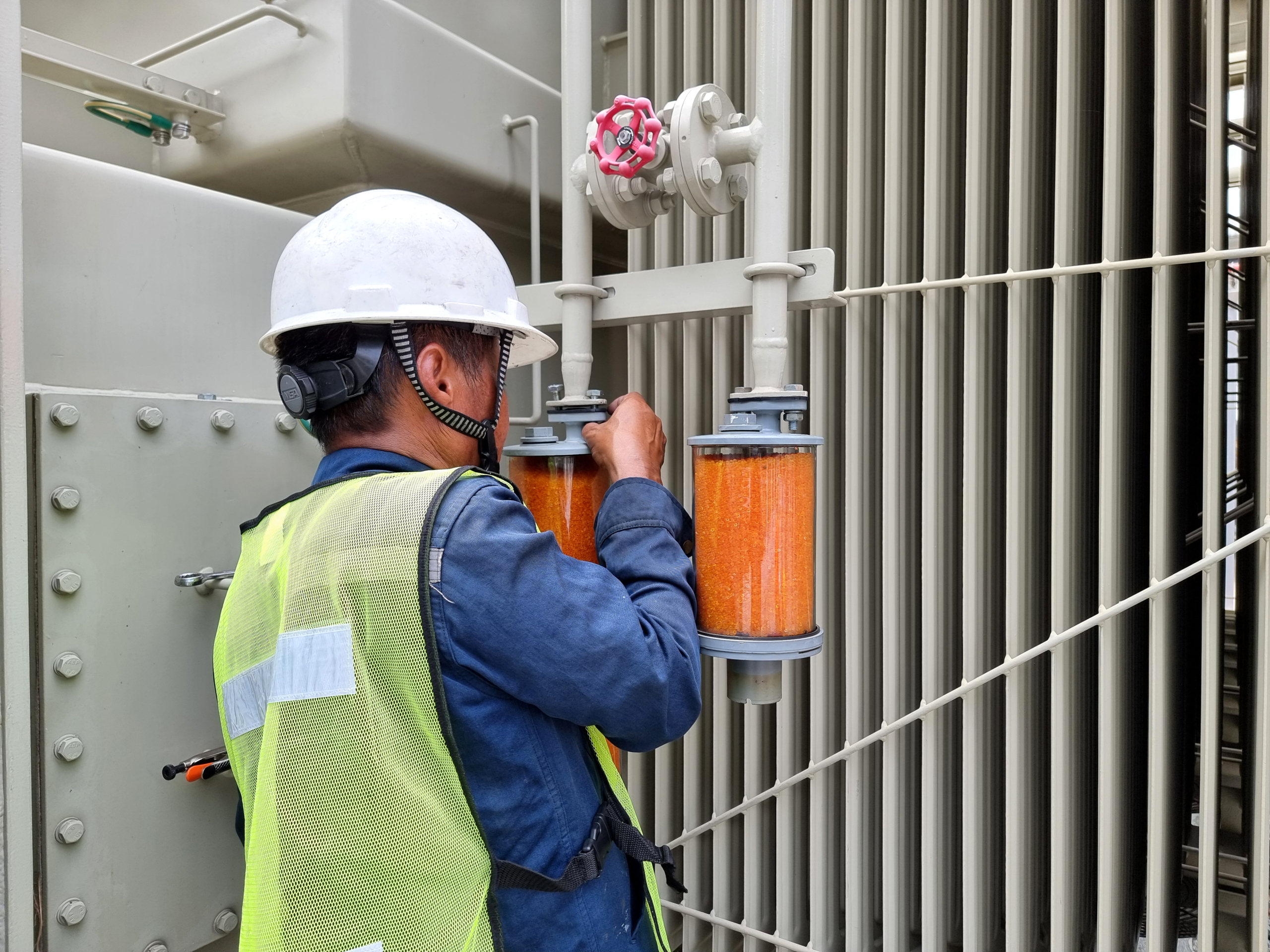
A desiccant breather is a filtration device installed on tanks, reservoirs, and equipment to help prevent moisture and airborne particles from entering through the vent. They are commonly used on hydraulic reservoirs, gearboxes, storage tanks, transformers, and other equipment that exchanges air with the surrounding environment.
Breather designs vary depending on the application and operating conditions. Many use silica gel, a material that attracts and holds water vapor, while others may use molecular sieves or other drying materials. Some designs also incorporate multiple filtration stages or valves to provide added protection in demanding environments.
In addition to removing moisture, desiccant breathers contain filtration media that captures airborne particles. Together, the filter and desiccant allow equipment to breathe while helping keep incoming air cleaner and drier.
How Do Desiccant Breathers Work?
In a hydraulic system, for example, fluid leaving the reservoir creates additional headspace and draws outside air in. When fluid returns, the level rises, pushing air back out. Temperature changes can also cause the air and fluid inside equipment to expand and contract, creating additional breathing cycles.
Without adequate protection, these cycles allow humid, particle-laden outside air into the system. Moisture can eventually condense into water, while solid particles can circulate with the fluid and contribute to equipment damage.
A desiccant breather treats the incoming air before it reaches the reservoir. Filtration media captures dust and other airborne particles, while the desiccant adsorbs water vapor. Some breathers use multiple filtration stages to provide additional particulate protection.
The process also occurs as air leaves the equipment. Moisture inside the reservoir can move outward with the exiting air and pass through the breather. Depending on the design, the desiccant may also attract moisture from the reservoir during periods of operation or shutdown.
Over time, the desiccant reaches its moisture-holding capacity. Many breathers use color-indicating desiccant to give maintenance personnel a visual indication that service or replacement is needed. How quickly this happens depends on operating conditions, including humidity and how frequently the equipment breathes.
Contamination Control and Equipment Reliability
For businesses operating hydraulic equipment, gearboxes, bulk storage tanks, and other fluid systems, controlling contaminants can support lubricant life, equipment reliability, and maintenance planning.
Choosing the correct breather is important because operating conditions can vary considerably between applications.
Key considerations include:
- Equipment and application: Hydraulic reservoirs, gearboxes, and storage tanks can have different breathing requirements.
- Airflow: The breather must accommodate the rate of air moving into and out of the system.
- Reservoir capacity: System size can affect the amount of air and moisture the breather must handle.
- Operating environment: Humidity, temperature, dust, washdowns, and other conditions can affect breather selection and service life.
- Connection and installation: The breather must be compatible with the equipment and its mounting requirements.
A Small Component with a Preventive Role
Desiccant breathers are one part of a broader fluid-management program that may also include filtration, fluid testing, tank maintenance, and routine inspections. For operations that depend on hydraulic fluids, lubricants, or stored fuels, controlling what enters through the vent can be an important part of protecting fluid condition and equipment reliability.
MSP can help businesses evaluate their lubricant and fluid-management needs and identify solutions suited to their equipment and operations. Contact MSP to learn more about lubricant and contamination-control solutions.